Why Downspout Extensions Fail in Florida’s Sandy Soil and What Actually Works
A gutter system is only as effective as its exit point. Water that flows smoothly through seamless gutters and downspouts still needs somewhere to go once it reaches the ground. In Central Florida, that final step is where many systems fail, and the reason is directly beneath your feet.
Florida’s sandy soil behaves differently than the clay or loam soils found in other parts of the country. It drains fast in some conditions and shifts unpredictably in others. Standard downspout extensions that work well up north often underperform or fail entirely here. Understanding why helps homeowners avoid the frustrating cycle of water problems that persist even after gutter upgrades.
How Downspout Extensions Are Supposed to Work
The purpose of a downspout extension is simple. It moves water away from the foundation before releasing it. The further water travels from the home before it enters the soil, the less likely it is to pool near the slab, saturate the foundation zone, or erode landscaping beds.
Extensions come in several forms, and each has strengths and weaknesses in Florida conditions.
Surface Extensions
These are the most common. A section of pipe or a splash block directs water a few feet away from the house along the ground surface. They are easy to install and inexpensive.
Buried Extensions
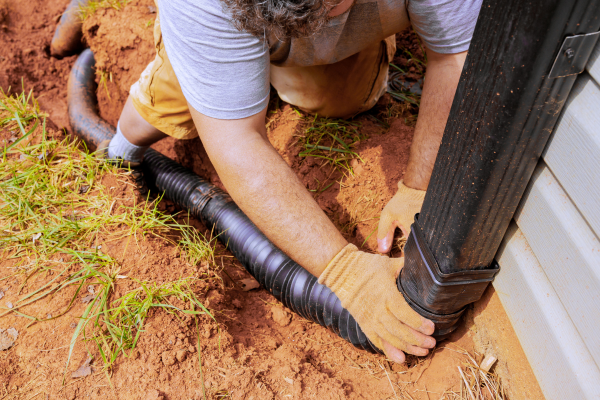
Underground pipes carry water further from the home, often to a pop-up emitter or a drainage area. These are invisible once installed and move water more effectively than surface options.
Flexible Roll Out Extensions
These curl up when dry and unroll when water flows through them. They are inexpensive but often clog, degrade in Florida sun, and do not move water far enough.
Why Florida’s Sandy Soil Creates Unique Problems
Sandy soil drains vertically very quickly. Water passes through it rather than spreading laterally. This characteristic changes how downspout drainage behaves near your home.
Water Drops Straight Down
When water exits a surface extension onto sandy ground, it does not sheet across the surface and away from the home. It soaks straight down, often right next to the foundation. The extension may look like it is working, but the water is still saturating the soil in the danger zone.
Erosion Channels Form Rapidly
Sandy soil is easily displaced by concentrated water flow. A single downspout releasing water onto bare ground can carve a trench within a few storms. That trench then directs future water back toward the foundation instead of away from it.
Buried Lines Shift and Settle
Underground extensions rely on a stable trench to maintain proper slope. Sandy soil settles and shifts, especially after heavy rain. Over time, buried lines lose their grade, develop low spots that hold water, and eventually clog with sediment.
The Consequences of Failing Extensions
When downspout extensions do not move water effectively, the gutter system becomes incomplete. Water accumulates near the foundation zone, creating problems that worsen with each storm.
Foundation Soil Saturation
Saturated soil around the slab can cause settling, cracking, and shifting. In Florida’s sandy conditions, the soil can compact unevenly when repeatedly soaked, creating stress on the slab above.
Landscaping Damage
Concentrated water destroys mulch beds, drowns plants, and washes away topsoil. Homeowners find themselves constantly replacing material along the drip line.
Stucco and Siding Splash Back
Water hitting the ground close to the house splashes back onto exterior walls. This repeated moisture exposure degrades stucco, stains siding, and creates conditions for mold growth near the base of the home.
What Works Better in Central Florida Conditions
Effective drainage in sandy soil requires strategies that account for how the soil behaves.
Extended Burial Depth and Distance
Buried lines need to carry water at least six to ten feet from the foundation, and they need proper bedding material to maintain slope over time. A compacted gravel bed prevents the settling that sandy soil alone cannot resist.
Pop Up Emitters in Stable Locations
Pop-up emitters release water at a designated point away from the home. When placed in an area with established turf or groundcover, the root system helps distribute water laterally instead of allowing it to drop straight through the sand.
Proper Integration With the Gutter System
Downspout placement, size, and routing must be planned as part of the overall seamless gutter system rather than added as an afterthought. When the gutter design accounts for Florida’s drainage conditions from the beginning, extensions perform far more reliably.
The Importance of Getting It Right the First Time
A drainage system that fails quietly is worse than one that fails obviously. Obvious overflow gets attention and gets fixed. Silent saturation near the foundation continues for months or years, causing cumulative damage that is expensive to repair.
Protect What Your Gutters Collect
Your gutter system does important work collecting and channeling water off your roof. That work is wasted if the drainage at the bottom fails to move water safely away from your home. In Florida’s unique soil conditions, the last few feet of your drainage system deserve just as much attention as the gutters themselves.
If your downspout extensions are not performing or you notice erosion, pooling, or settling near your foundation, a professional evaluation of your gutter and drainage system can identify where the failure is occurring and what solution fits your property’s specific soil and grading conditions.