What Fruitland Park Homeowners Should Fix Before the Next Central Florida Storm
Living in Central Florida means every hurricane season arrives with the same question: which parts of your home will hold, and which will fail first? Fruitland Park sits inland, far from the coast, and that distance creates a false sense of safety. Tropical systems regularly push severe wind and rain across Lake County, and homes that ignored small repairs all year take the worst of it. The smartest preparation is not a last-minute scramble. It is a short list of fixes completed while the sky is still clear.
Why Hurricane Season Punishes the Small Repairs Homeowners Put Off
A loose gutter bracket, a cracked fascia board, or a torn screen panel looks harmless in April. In a hurricane, each one becomes an entry point. Wind lifts anything already loose, and rain drives through every gap the wind opens. What starts as a minor issue becomes storm damage that spreads across the whole exterior in one night. Neighbourhoods across Central Florida show the same pattern after every system passes: the homes with deferred repairs carry the biggest repair bills, and the damage goes unaddressed long enough to reach the interior.
The Roofline Repairs That Decide How Your Home Rides Out the Wind
The roof edge takes the first hit in any severe storm. Wind presses up against the overhang, and it finds every weak spot along the line. A shingle roof with lifted asphalt shingles, soft fascia, or failing seals gives the storm a grip, and once wind peels one section, the next follows.
Fascia, Soffit, and the First Places Wind Finds a Way In
Fascia and soffit do more than finish the roofline. Fascia anchors the gutters and seals the roof edge, while vented soffit lets the attic breathe. When either one rots or pulls loose, wind pushes moisture and debris into the attic, and the moisture stains the ceiling of the bedroom below. Fascia board failure is what leaves every gutter hanger with nothing solid to grip, which is why the roofline fails as a system rather than one board at a time.
What a Pre-Storm Roofline Inspection Should Catch
A proper assessment walks the whole line before the storm does. It looks for soft spots behind the gutters, gaps in the flashing around vents and chimneys, lifted shingles, and soffit panels that no longer sit flush. Catching those warnings early keeps the repair straightforward. Waiting until a storm strip peels the edge turns a small fix into a partial new roof conversation.
Gutters and Drainage: The Fix That Protects Everything Below the Roof
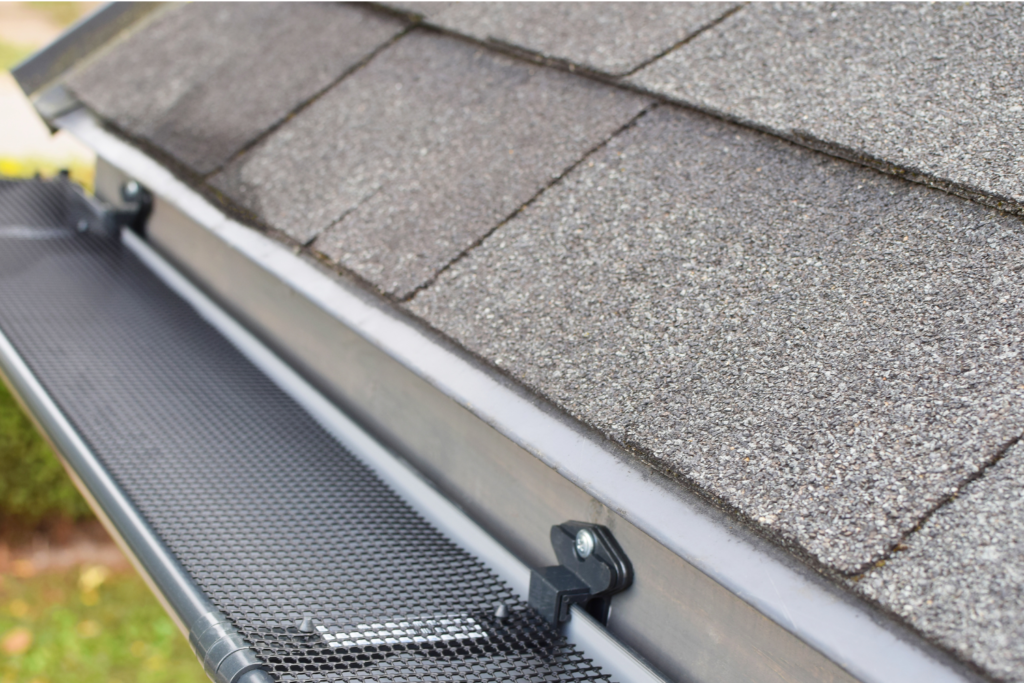
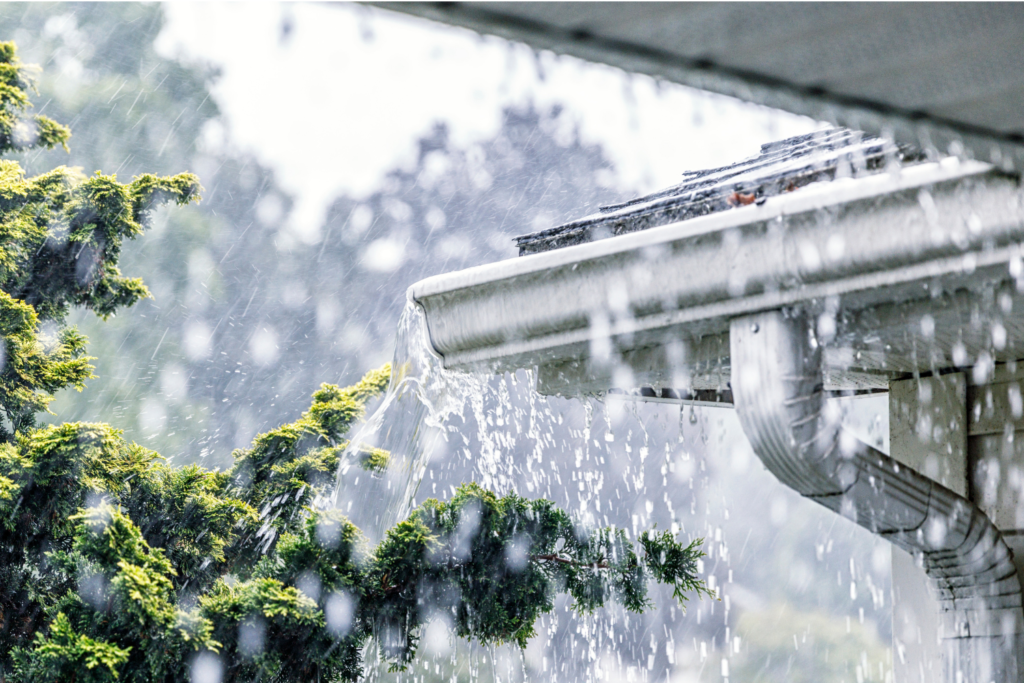
Gutters move thousands of gallons off a Florida roof during one tropical system. When they sag, clog, or pull away, that water lands beside the foundation instead of flowing away from the home. Fruitland Park’s sandy soil makes the problem worse, because discharged water soaks straight down beside the slab instead of sheeting away.
Where Fruitland Park Homes Take On Water During Heavy Rain
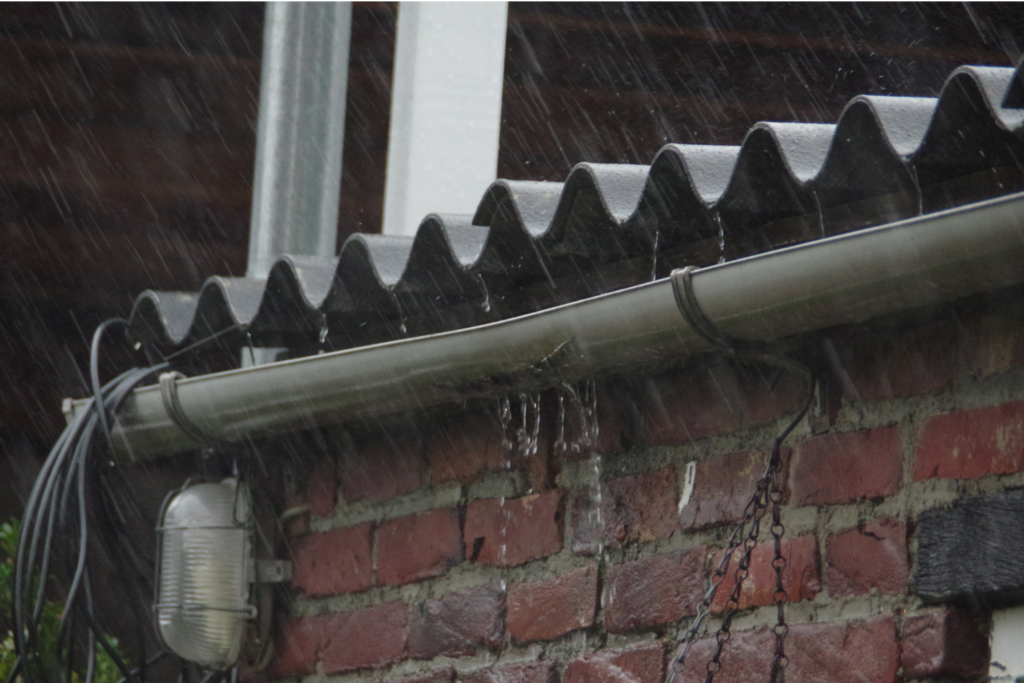
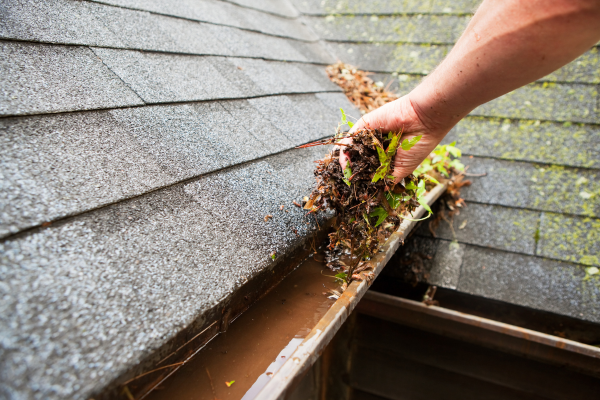
The trouble spots are predictable. Water pools where runs have lost their pitch, spills over clogged sections, and collects at downspouts that empty too close to the wall. From there, it works toward the foundation, seeps under the garage slab, and leaves water stains on interior walls. Overflow also destroys landscaping, because water pouring over the edge drowns mulch beds and carves trenches through the soil season after season.
Why Drainage Fails Before the Storm, Not During It
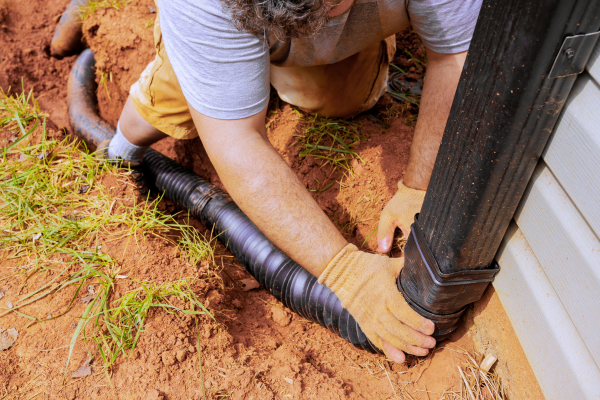
Drainage systems rarely fail at the height of a hurricane without warning first. They fail quietly through months of small clogs, loose hangers, and buried lines that have shifted in the sand. Downspout extensions built for Florida soil move water well clear of the foundation, and a system that is sealed, sloped, and secure before the season handles the burst volumes that gutter slope is designed to manage.
Screen Enclosures and Siding: The Surfaces Storms Hit First
Screen enclosures and vinyl siding take the storm’s first blows because they present the largest flat surfaces to the wind. Both fail in ways that spread, and both cost far less to repair before a system arrives than after.
How One Torn Screen Spreads Damage Across the Whole Enclosure
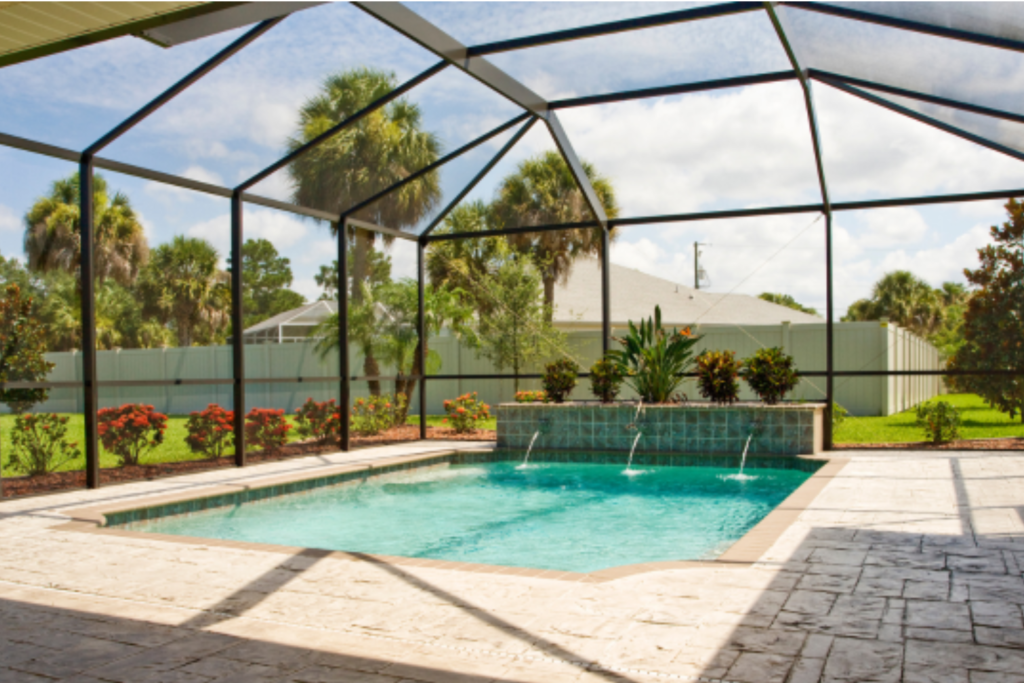
A single torn panel changes the airflow inside an enclosure. Wind catches the opening, presses against the remaining panels, and pops them one by one until the frame itself bends. Screen enclosure storm damage almost always starts with one small tear that a pre-season repair would have handled in an hour.
Loose Siding Panels and the Slow Failure Nobody Notices
Siding fails slowly. Panels loosen a little each season as fasteners back out and seams widen under Florida’s sun and daily heat cycles. Homeowners walking the yard rarely notice until a storm finds the first loose panel and strips a whole wall section. A quick check of every seam before hurricane season keeps the wall sealed and the moisture out.
Emergency Preparation Beyond the Repair List
Repairs protect the structure, but preparation protects the household. Every Fruitland Park home should keep a portable generator serviced with fresh fuel, a documented record of the home’s condition for insurance coverage, and a plan for outages that stretch past a day. A generator keeps the essentials running, but it cannot protect a roofline that was already failing, which is why the repair list always comes first. Documenting damage before the storm also makes any later claim smoother, because insurers respond faster to clear before-and-after records. Homeowners who combine both, a repaired exterior and a prepared household, ride out the next storm with far less to restore afterward.