Why Wildwood Homes Flood Near the Foundation and How Proper Downspout Drainage Solves It Permanently
Your gutters may be functioning perfectly, collecting every drop of rain from your roof and channeling it into downspouts without a single leak. But if those downspouts deposit water directly against your foundation, your gutter system is actually concentrating damage rather than preventing it.
Wildwood homeowners across Sumter County experience this problem frequently. Properly functioning gutters combined with inadequate downspout drainage create concentrated water discharge points that erode soil, saturate foundations, flood garages, and destroy landscaping in localized areas. The solution is not new gutters. It is professional downspout routing that directs water far enough from the home to eliminate all contact with structural elements.
How Downspout Discharge Creates Foundation Problems in Wildwood
Concentrated Flow vs. Distributed Runoff
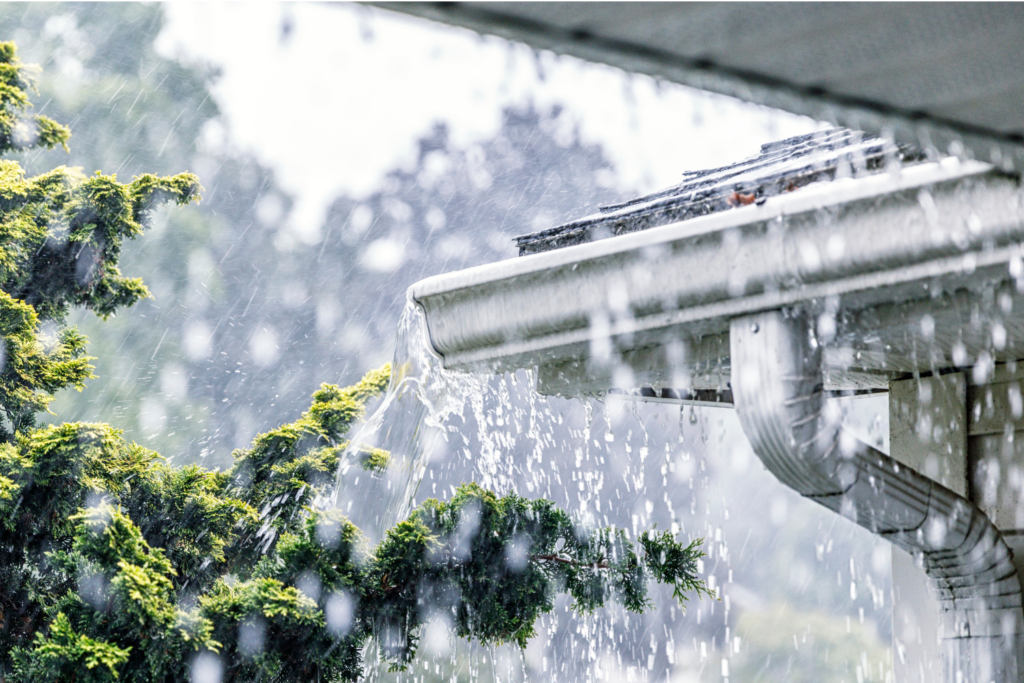
A roof collects an enormous volume of water during a Florida thunderstorm. A 1,500 square foot roof receiving one inch of rain produces approximately 935 gallons of runoff. Your gutter system concentrates all of this water into four to six downspout discharge points. If those points deposit water within two feet of your foundation, you are directing nearly 200 gallons per downspout directly against your home during every significant rain event.
Wildwood’s Sandy Soil Absorbs and Redirects Water
Wildwood’s predominantly sandy soil absorbs water quickly but also allows it to migrate laterally underground toward foundation walls. Water deposited too close to the home percolates downward, then moves horizontally through sand toward the lowest point, which is often the foundation itself. This subsurface moisture creates hydrostatic pressure against foundation walls that causes seepage, efflorescence, and eventual structural compromise.
Flat Terrain Prevents Natural Drainage Away From Structures
Many Wildwood properties sit on relatively flat terrain that provides minimal natural grade to move water away from buildings. Without intentional grading or extended downspout routing, discharged water simply pools and soaks into the ground immediately adjacent to the home rather than flowing away.
Signs Your Wildwood Home Has Downspout Drainage Problems
Visible Erosion Trenches Below Downspouts
Soil trenches, washed-out mulch beds, or exposed landscape fabric directly below downspout discharge points indicate concentrated water damage that has been occurring through multiple storm events.
Soil Staining on Siding or Foundation Walls
Water splashing from short downspouts or ground-level discharge points throws soil and organic debris onto siding, creating persistent staining patterns that mark the exact location of inadequate drainage.
Moisture or Dampness in Garage or Interior Spaces
Consistent moisture appearing on garage floors, interior walls near the foundation line, or stored items near exterior walls during rainy periods often traces back to downspout water being deposited too close to the structure and migrating through foundation materials.
Professional Downspout Drainage Solutions
Downspout Extensions Above Ground
The simplest solution extends downspout discharge four to six feet away from the foundation using angled extensions that deposit water onto graded surfaces sloping away from the home. Extensions work well where surface drainage paths exist, and aesthetics are not a primary concern.
Underground Downspout Piping
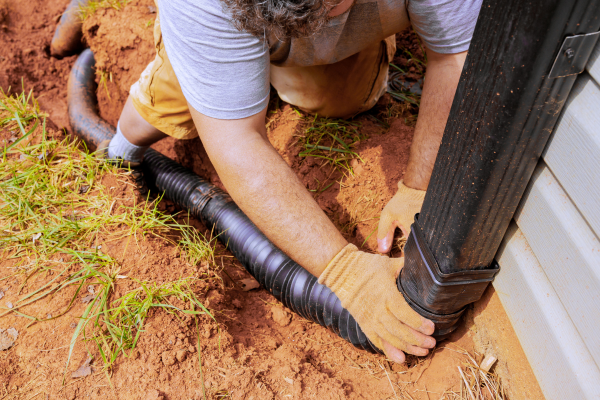
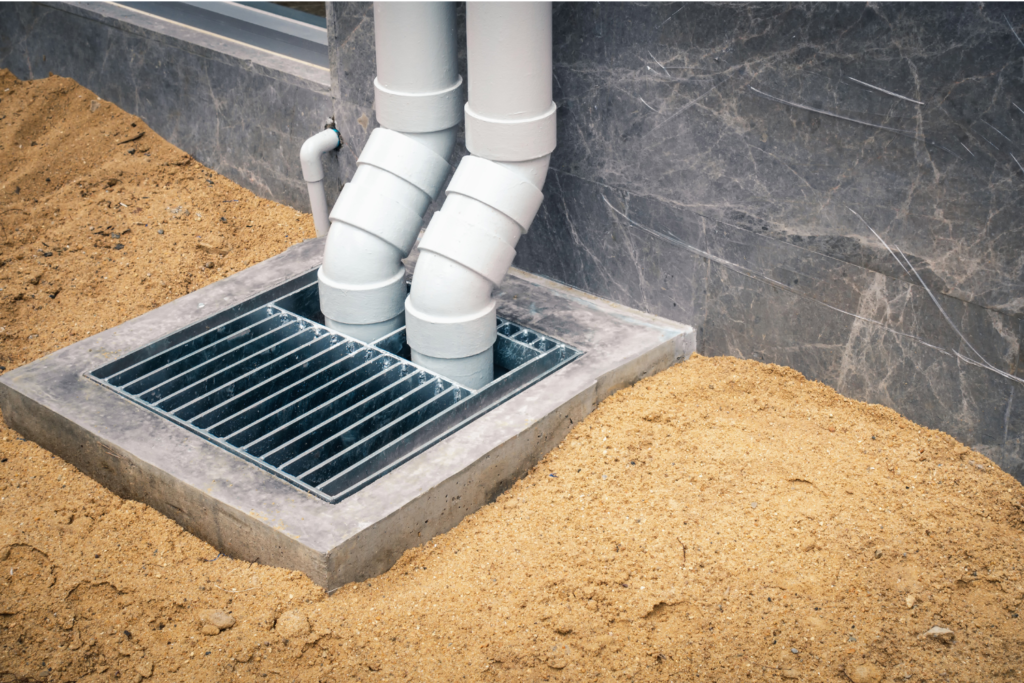
For a cleaner appearance and more effective discharge distance, solid PVC pipe buried below grade connects downspouts to discharge points 10 to 20 feet from the home or routes water to designated drainage areas, street gutters, or retention areas. Underground routing keeps water completely invisible while moving it far from structural elements.
Integration With Gutter System Assessment
Effective downspout drainage planning requires evaluating the entire gutter system for proper sizing, slope, and downspout quantity relative to the roof area. A system with insufficient downspouts overloads each discharge point with excessive volume, making even proper routing less effective.