Why Ocala’s Grand Oaks Are So Hard on Gutters and What Holds Up
The grand oaks define Ocala’s oldest neighborhoods. They shade the streets, frame the homes, and raise property values, and they also subject every roofline beneath them to the toughest debris test in Central Florida. Here is what a canopy year actually does to a gutter system, and what a system built for the oaks looks like.
A Canopy Year in Ocala Is Not a Fall Problem
Gutter advice written for northern climates assumes one autumn leaf drop and a quiet rest of the year. Live oaks run a different calendar, and it stays busy in every season.
Acorns That Wedge in Downspouts and Weigh Down Runs
Acorns arrive in late fall and keep coming for weeks, and their shape makes them worse than leaves. A leaf mats down and washes through, but an acorn is round and hard, and it wedges at every elbow and outlet where a downspout turns. One acorn dams the flow, and the next storm piles more behind it. A run that holds a full season of acorns also carries real weight, and the hangers feel every pound of it.
Spring Leaf Drop and the Pollen Tassels That Turn to Sludge
Live oaks shed their leaves in spring, not fall, right as the rainy season approaches. The same weeks bring pollen tassels, and those stringy catkins do something leaves never do: rain turns them into a paste that coats the gutter floor and plugs outlets and mesh. A gutter that survived the acorns cleanly can still overflow in April under a layer of tassel sludge, and the water has nowhere to go but over the edge.
Why Sectional Gutters Fail First Under the Oaks
Sectional systems arrive in pieces, and every seam in a piece-by-piece run becomes a catch point the canopy knows how to find.
Joints Where Debris Collects, and Leaks Start
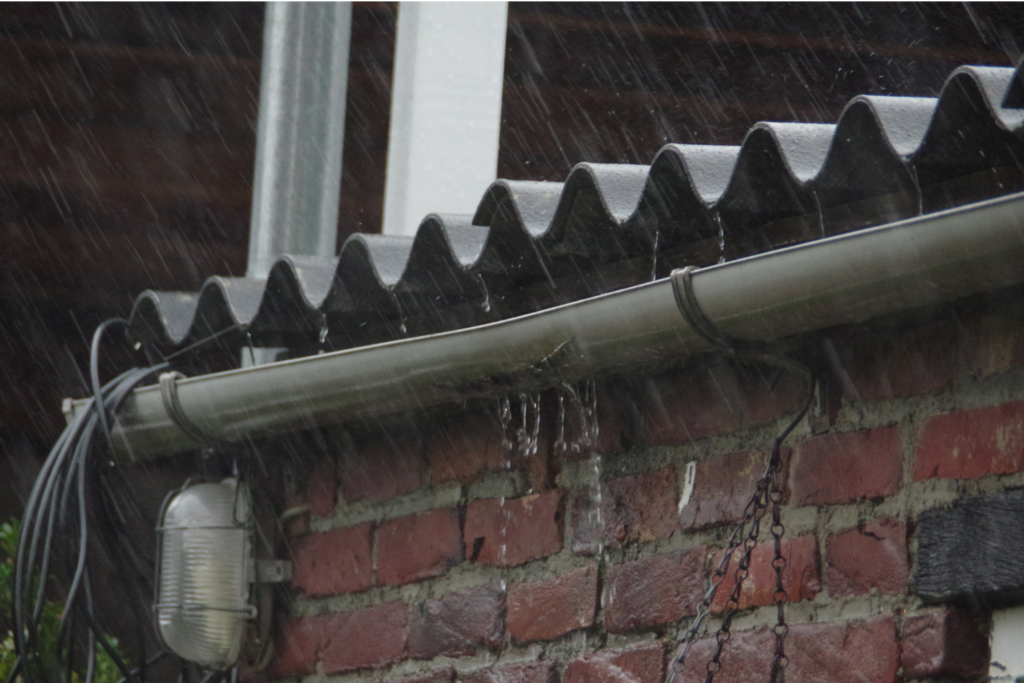
Twigs bridge across a joint, leaves mat against the bridge, and water slows exactly where it should move fastest. Sediment settles into the seam, then the sealant beneath it gives way, and the joint leaks with every rain after that. It is the same pattern behind the gutter leaks that return to Lady Lake homes every rainy season, and under the oaks it arrives faster.
Weight That Pulls Hangers Loose From the Fascia
A canopy gutter carries more than water. Wet leaves, acorns, and sludge add pounds that a clean run never sees, and that load works the hangers loose one storm at a time. A gutter that pulls away even half an inch loses its gutter slope, and a flat or back-pitched run pools instead of draining, which adds weight and loosens more hangers in a slow spiral.
What a Gutter System Built for the Canopy Looks Like
A canopy-ready system follows three principles: fewer catch points, surfaces that shed debris, and paths wide enough to flush what gets through.
Seamless Runs With Fewer Places to Catch Debris
A seamless gutter forms as one continuous piece per run, so the joints that collect twigs and leak under debris simply do not exist. Water travels an unbroken channel from end to end, and the only connections left are the outlets, which a crew sizes and positions deliberately.
Guards That Shed Acorns Instead of Catching Them
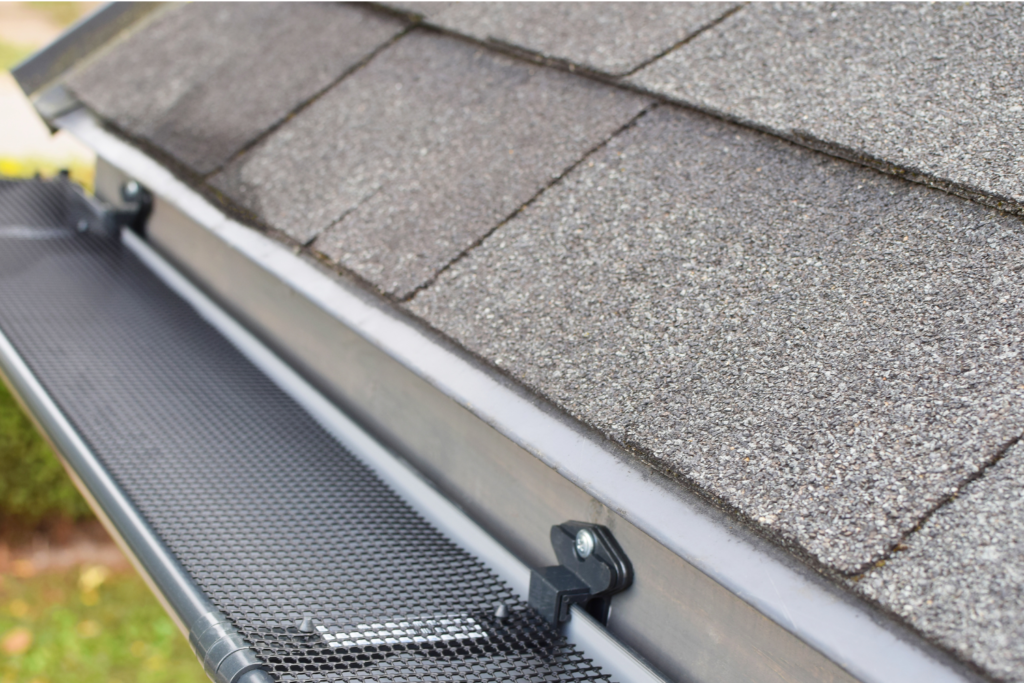
Guard choice matters more under oaks than anywhere else. Fine mesh keeps tassels, acorns, and leaf fragments out of the channel while still passing a Florida downpour, and a smooth, pitched surface lets round acorns roll off rather than pile up. Reverse curve designs struggle here: heavy rain overshoots the nose, and debris collects at the opening. The same logic drives the gutter guards that Wildwood homes with heavy tree cover rely on, and leaf guards pay off fastest under a canopy like Ocala’s.
Downspouts Sized and Routed for Heavy Debris Loads
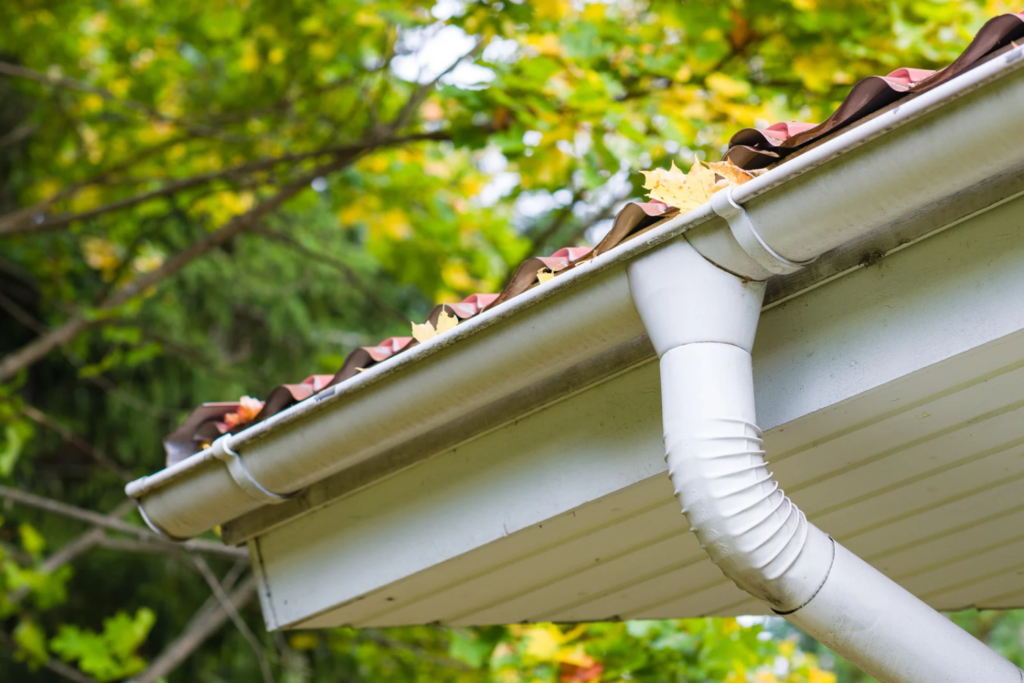
The downspout does the quiet work. A canopy home needs wider downspouts, smooth elbows instead of sharp angles, and outlets set where a crew can reach them. Downspout extensions then carry the discharge well past Florida’s sandy soil, so the water that does get through leaves the foundation instead of pooling at the corner.
The Shade Problems Guards Do Not Solve
Guards stop what falls, but shade works on a roofline slowly and constantly, and no screen stops dampness.
Algae and Streaking on the Shaded Side of the Roof
The shaded side of an Ocala roof stays wet long after the sunlit side dries, and algae takes hold in exactly that damp. Dark streaks spread down the shingles and stain the gutter face, and the gutter on that side holds moisture for hours after every rain, which accelerates everything else on this list.
Damp Fascia and the Rot That Follows
Constant shade and slow drying keep the fascia board soft, and rot moves in behind the gutter where nobody sees it. That rot is the hidden failure behind most sagging runs, because hangers grip fascia, and fascia board failure undoes a gutter system from the inside. A crew that finds rot replaces the soffit and fascia together with the gutters, so the new system attaches to solid wood.
Living Under the Oaks Without Fighting the Gutters
The canopy earns its keep in shade, beauty, and value, and the right system lets a homeowner keep all of that without a twice-yearly fight. Seamless runs remove the catch points, fine mesh guards shed the acorns and tassels, wide downspouts flush what gets through, and sound fascia gives the whole system something solid to hold. A professional read of the roofline, from slope to hangers to the wood behind them, tells an Ocala homeowner which pieces their yard already has and which ones the oaks will find next.